
Epoxy Flooring Systems
- Offers high damage tolerance
- Can be rapidly installed
- Can last 25-30 years
- May need professional assistance
- Hard to find at local stores
- Cost 50-100 dollars more than lesser epoxies
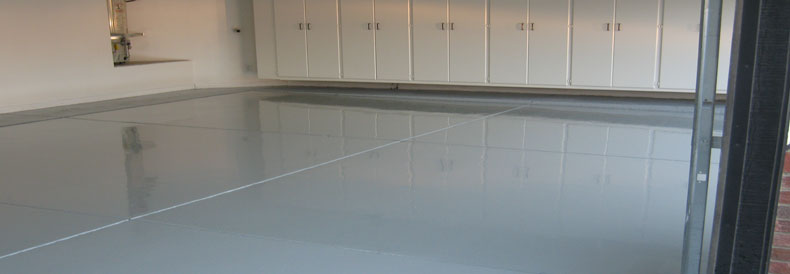
Taking a step down from the 100 percent solid epoxy, you will find a waterbased epoxy system. These systems are not to be confused with the lowly DIY kits you can find at your local hardware store, they are still professional-grade epoxies. This is the type of epoxy recommended for light-duty commercial facilities and residential garages for their bang for the buck performance and attractive appearance. While water-based epoxies don’t offer the same level of protection as the 100 percent solid epoxy, you will find that this flooring competes with top of the line flooring systems such as polished concrete in terms of durability. If you need a durable yet attractive flooring system, a water-based epoxy can be the right move.
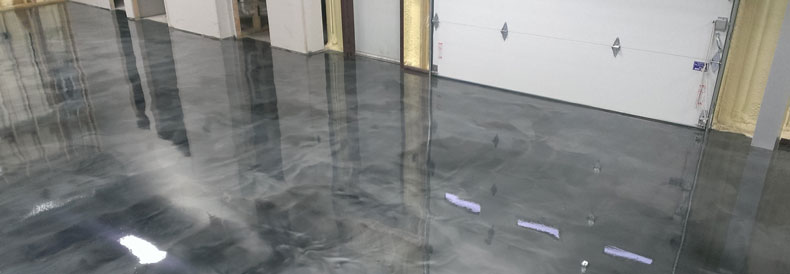
- Creates dazzling finishes with reflective properties
- Can be paired with the 100 percent solid epoxy
- Provides an easily maintainable luxury finish
- Best to be done by a trained contractor
- Incredibly hard to DIY without training
- Costs more than a standard epoxy
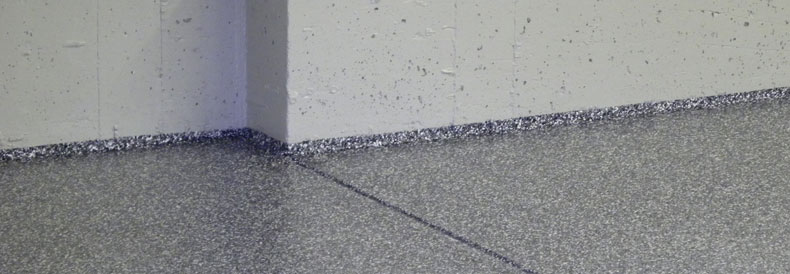
If you haven’t noticed, the epoxy flake flooring is by far one of the most popular and easy to obtain systems on the market. But, with its industrial-looking finish, many consider this variant of epoxy to be extremely limited to where it can be used. While this is true for some tastes, flaked epoxy has seen use in a magnitude of settings. The most popular of coarse is its use in residential garages thanks to its high level of customization that uses multi or single-colored flakes in an endless configuration of color schemes. But, there is more than meets the eye with this epoxy. The flakes in the epoxy give the seamless and smooth flooring a textured finish which in turn makes the flooring easier to walk on when wet or soiled.
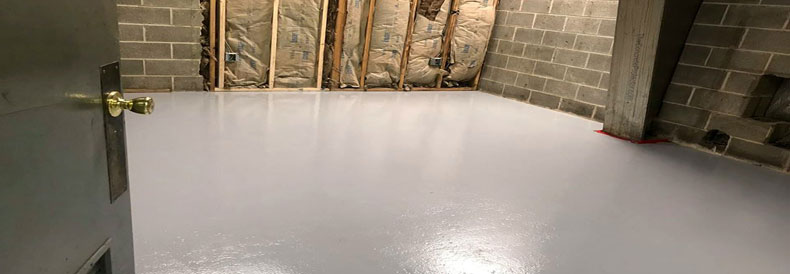
When it comes down to it, if you don’t want to have epoxy as your main flooring system, there are still ways that the flooring system can benefit whatever flooring you choose to use. For example, there is a variation of epoxy known as the vapor lock epoxy. Vapor lock epoxies are most commonly used in moist areas that require the service of waterproofing to keep the flooring above dry and usable. Another form of epoxy base coat is the anti-static epoxy base. This variation is commonly used in data houses, server rooms, and technology manufacturing plants for its nonconductive properties.
Now that you know about the most common types of epoxy flooring systems, its time to make the decision of choosing whether to DIY your system or bring in outside help. In our experience, the extra cost of using a contractor gives you extra assurance for the future as contractors offer warranties, high-quality materials and the know-how of how to properly install epoxy. But, the choice is up to you and all we can say is good luck!